About the Prevent Blindness Children’s Vision Screening Certification Course
Differences in screening tools, referral guidelines, and follow-up processes can lead to inconsistent identification and treatment of vision problems. As a result, children may not receive the same quality of vision and eye care across the United States. Strengthening screening practices through consistent, evidence-based training is one way to improve accuracy, consistency, and equity. The 2026 updated online Children’s Vision Screening Certification Course prepares participants to use evidence-based screening practices confidently in everyday settings.
“Thank you for offering this wonderful program. It was so nice to explore in depth the how and why behind vision screenings in the school environment and comforting reassurance that we are conducting these screenings using best practice. [The trainer] was exceptional and always available to answer questions and provide clarification.
Prior to this course I questioned my vision screening techniques, the validity of the charts/tests we were using in our district and if we were conducting the screenings following up to date, best practice.
Now I can be confident in my vision screening assessment, which is so important when screening students during such a critical period in their academic development – it should seriously be mandatory for all school nurses!
Thank you!”
Dorice Groshon RN, BSN, CPN
“The Prevent Blindness Children’s Vision Screening Certification Course is so amazing and I hope that all schools, clinics, or any place that does vision screenings are able to get this resource and incorporate this course into their training.
I have been screening vision for eight years now and I can truly say that this course emphasized how critical poor vision can impact children and their behaviors, as well as their learning.
I work with children in Head Start, so I was reminded how critical the follow-up process for failed vision screenings are. Poor vision can lead to blindness if not followed up. Everything I learned from this course will definitely be incorporated into my screenings.”
Zong Her, CMA-Child Wellness Service Provider, Community Action Partnership of Ramsey and Washington Counties Head Start, MN
“Once I got the certification, [it] gave me the boost to feel more empowered … I was able to get a little bit more fine-tuned with actual vision screening. I could do it quicker… and so that was a positive outcome.”
School Nurse
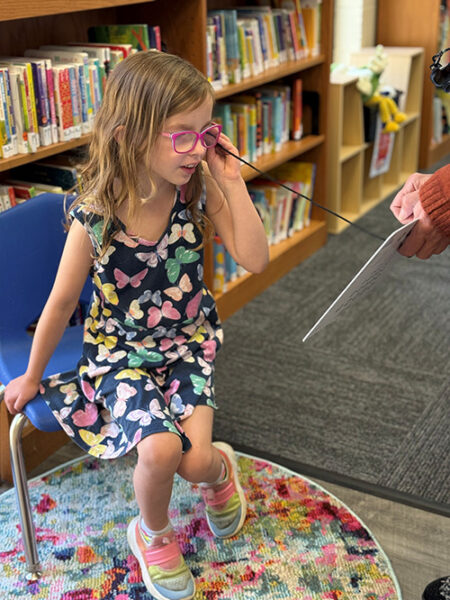
- Conduct accurate, evidence-based vision screenings for children from birth through high school
- Provide parent/guardian/caregiver education about healthy vision for learning, the importance of an eye exam, and preparing a child for the exam
- Make appropriate referrals for eye examinations
- Apply a systematic follow-up process to help reduce the gap between referrals from vision screening and completion of recommended eye examinations and treatment



About 1 in 17 preschoolers and 1 in 4 school-age children have a vision disorder that, if left untreated, may affect learning, social and athletic performance, and self-esteem.
These findings reinforce the importance of accurate screening, appropriate referral, and timely follow-up to support children’s academic and social development.
A consistent, evidence-based vision screening approach taught in the course depends on the appropriate use of validated tools and techniques, clear referral criteria, and structured follow-up processes.
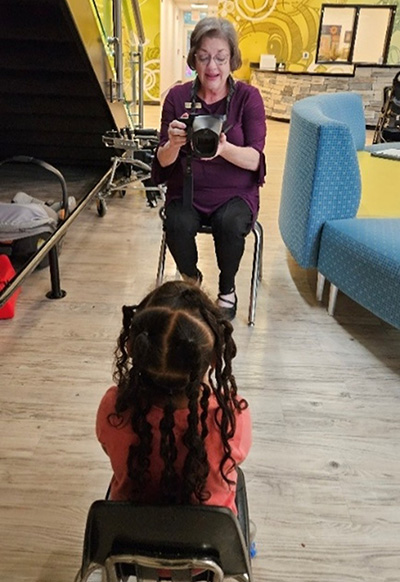
- School Nurses
- Early Head Start/Head Start Staff
- Early Care and Education Staff
- Community Volunteers
- Public Health Nurses
- Primary Healthcare Providers:
- Medical Assistants
- Pediatric and Family Nurse Practitioners
- Physician Assistants
- Anyone who screens children’s vision
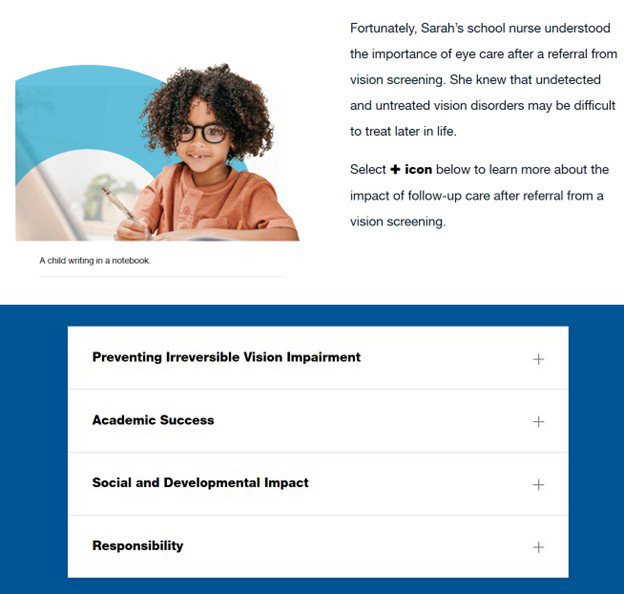
a screenshot from the Prevent Blindness Children’s Vision Screening Training Course
- Self-Paced
- Instructional modules for the ages of children you screen – from infants through high school
- Animated videos to support learning
- Vision screening demonstration videos
- Interactive content
- Knowledge checks
- Case studies
- Virtual Individualized Mentoring Session led by a Prevent Blindness trainer, in which participants conduct a vision screening with a child or adult while receiving real-time guidance and feedback

- Depends on the learner’s pace
- Allow 3 to 5 hours for completing modules and reviewing all handouts/ job aids
- Allow 30 minutes for the Virtual Individualized Mentoring Session after modules are completed
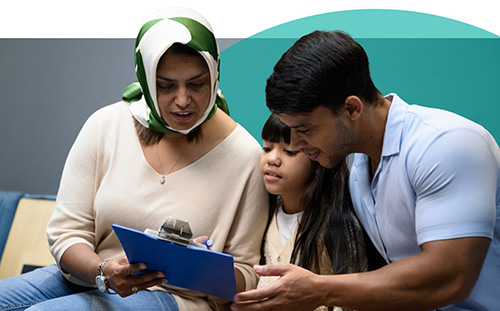
Up to 6 months to complete all assigned modules and the required Virtual Individualized Mentoring Session with a child or an adult participant to demonstrate application of skills learned in the course

- 3-year nationally recognized certification in Children’s Vision Screening
- 4–6 Nursing Continuing Professional Development (NCPD) contact hours, depending on the ages of children you screen
We are able to offer Nursing Professional Development Contact Hours for this course. The cost for Contact Hours will depend on your learning path (e.g., which ages of children you screen). Upon course completion you will be directed to Northeastern University School of Nursing, which is an accredited provider of nursing continuing professional development by the American Nurses Credentialing Center’s Commission on Accreditation (ANCC).
The planners and presenters have no financial relationships within the past 24 months to report. No commercial support was received for this educational activity.

- Infants
- Toddlers
- Preschoolers
- School-Aged Children through High School
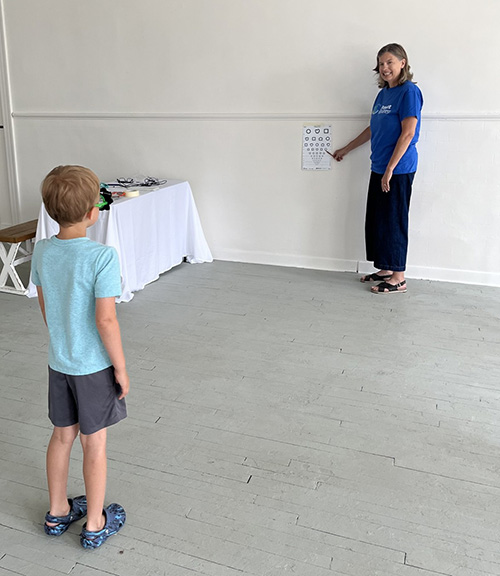
- Competency in conducting evidence-based vision screening
- Understanding of validated screening tools and techniques
- Ability to communicate results and next steps clearly to families
- Implementation of structured referral follow-up processes
- Commitment to reducing variability and improving quality in screening practices
- Support for timely identification and equitable access to eye care for children
What Is the Cost?
Initial 3-Year Certification
$225 per learner
Groups
Discounts available for groups of 10 or more learners
Email [email protected] for information on discounts per group size
Recertification
$130 per learner
To register for recertification please email [email protected] for cost and access to course.
How Do You Register?
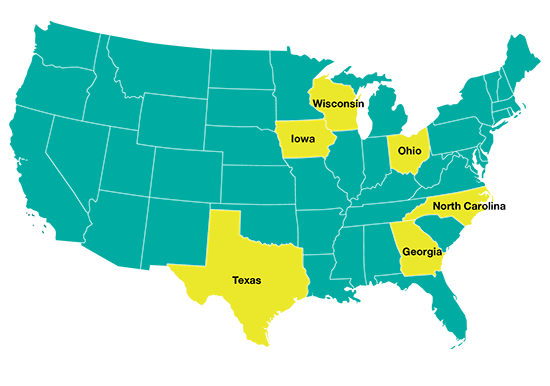
If your state is NOT one of the six highlighted above, you may be eligible for the national children’s vision screening training course. Please check to determine if your state has mandated vision screening training and certification.
If your state is NOT one of the six highlighted above, you are eligible for the national children’s vision screening training course. Please check to determine if your state has mandated vision screening training and certification.
Enroll now to join thousands of professionals who have earned their Children’s Vision Screening Certification and are making a difference in children’s lives.
If you also perform hearing screenings, you can access a certification course offered by our friends, the Early Childhood Hearing Outreach (ECHO Initiative at the National Center for Hearing Assessment and Management) at learntoscreen.org.